
Enterprise middleware
Workforce Transport Orchestration Portal
A roster-driven transport scheduling portal that syncs workers, housing locations, fleet assets, and project sites from abstracted enterprise registries — then accepts transport requests, assigns vehicles with capacity-aware splits, optimizes pick-up routes, and publishes boarding details after finalize.
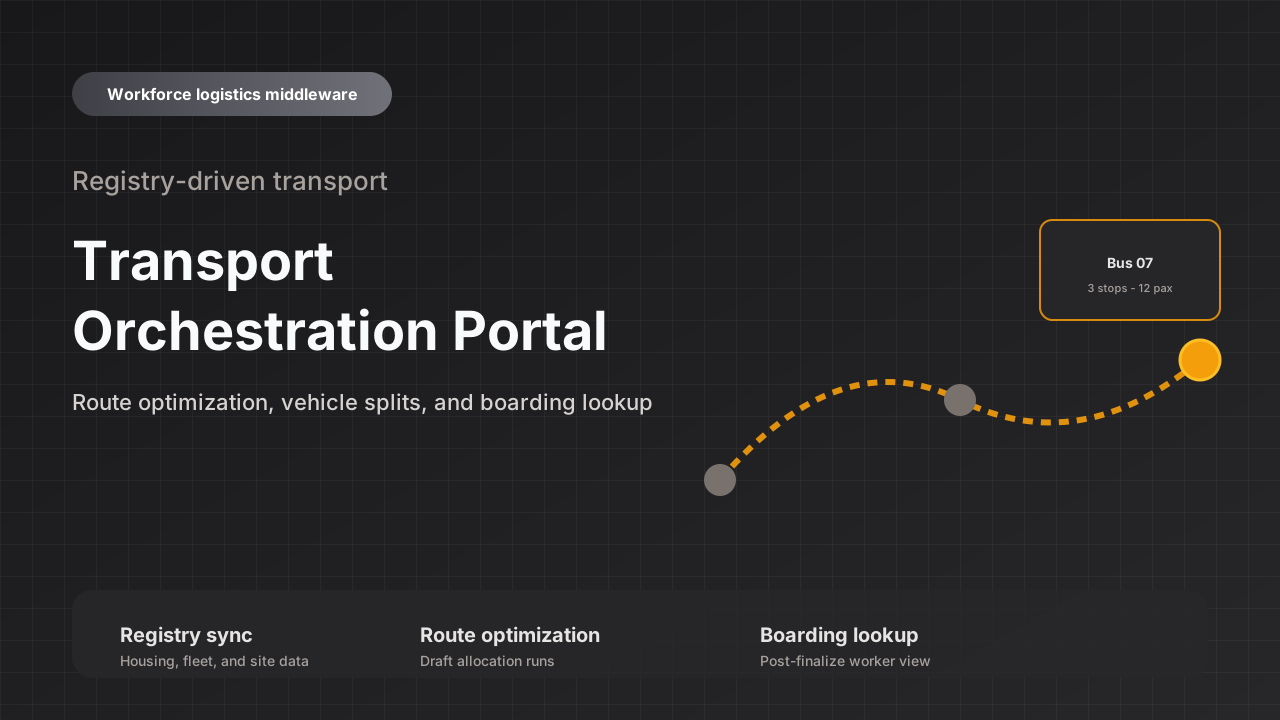
Transport schedulers coordinated worker movement using disconnected spreadsheets, phone calls, and manual vehicle assignments. Worker housing locations, fleet capacity, approved leave, and project site coordinates lived in separate enterprise systems with no unified orchestration layer.
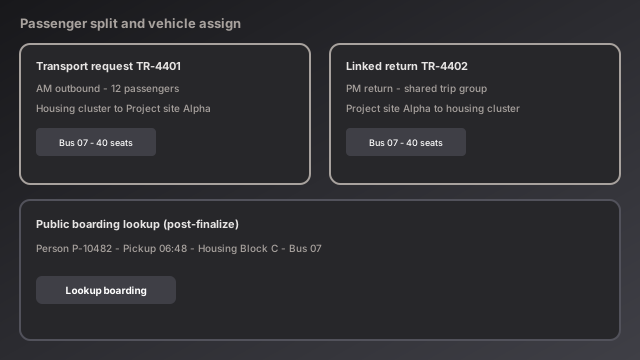
Round-trip requests needed to split into AM outbound and PM return legs. Over-capacity groups required passenger splits across multiple vehicles. After routes were finalized, workers needed a simple boarding lookup without logging into the full scheduler UI.
The portal middleware normalizes data from multiple registries through a dedicated external data normalizer, stores roster and allocation state in an application datastore, and delegates travel matrices and route geometry to a third-party routing engine with regional geocoding fallbacks.
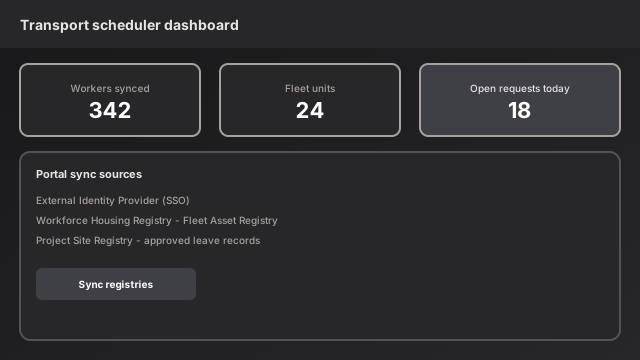
- Sync: Aggregated pull from SSO-linked workforce, housing, fleet, and project site registries.
- Requests: Round-trip submissions create linked AM/PM transport requests with shared trip group identifiers.
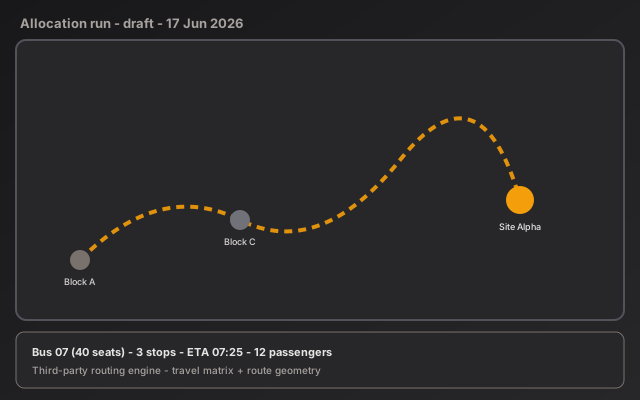
- Allocation: Capacity-aware vehicle assignment, optional passenger splits, then route optimization into draft allocation runs.
- Finalize: Locked runs expose public boarding lookup by person identifier — embeddable via workforce widgets with SSO handoff.
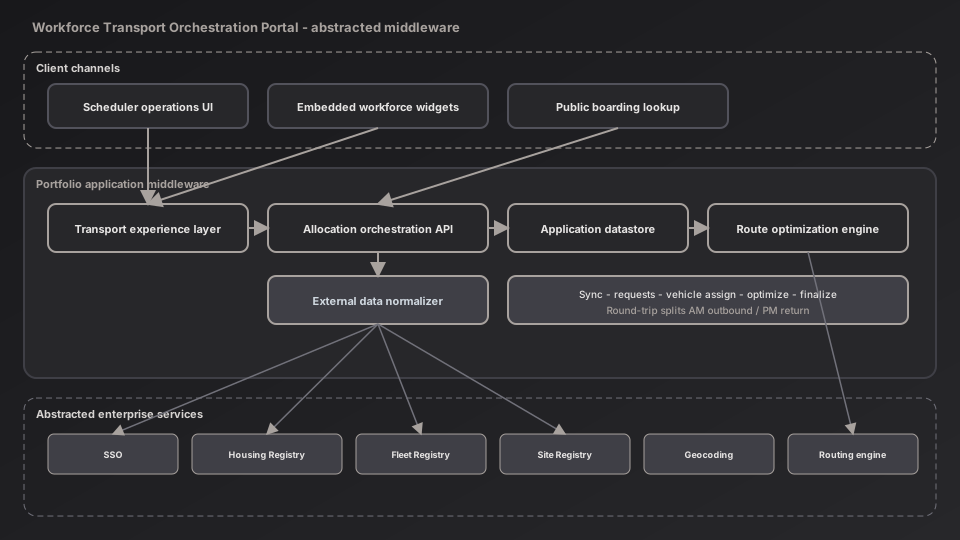
Click diagram to zoom
Schedulers replaced manual coordination with a single portal: sync registries once, submit requests from the main UI or embedded workforce widgets, assign vehicles, optimize routes on a map review screen, and finalize runs for worker self-service lookup.
Request-driven optimization supports per-request vehicle groups and passenger splits, while a legacy VRP mode remains available for depot-to-worksite batch routing. All external JSON shapes are normalized centrally so registry field changes do not ripple through business logic.
These actions simulate middleware responses using hardcoded portfolio data. No production registries or routing APIs are contacted.
Raw middleware response
Demonstration uses synthetic data; production systems connect to governed enterprise services.